
Build your own travel app or choose a specialized SaaS solution?
Jolien | Travelia
4min. reading time

More and more travel organizations want to provide better guidance to their clients before and during their trip. Not with loose PDFs, long emails, or printed travel papers, but with all important information clearly arranged in one place.
An own travel app then seems like a logical step.
The traveler always has their travel documents, flight details, vouchers, tips, and contact information at hand. The travel organization strengthens its brand, offers extra service, and remains visible during the trip as well. That sounds attractive. And it is.
But then the next question quickly arises: do you have an app built itself, or do you choose a specialized SaaS solution?
Both choices can make sense. Yet, building your own app is often underestimated. Because an app is not a one-off project that is done as soon as it is in the app store. Actually, that is just when it starts.
Building your own travel app: maximum freedom, but also a lot of responsibility
Having an app developed entirely by yourself offers a lot of freedom. You decide how the app looks, what features it includes, and how everything is technically set up.
For large organizations with their own IT department, this can be a conscious decision. Especially when there are highly specific processes that need to be developed completely to measure.
But custom development also means responsibility. Not just during development, but particularly afterwards. An app has to keep working on various phones, tablets, and operating systems. Updates to iOS and Android, new smartphone models, security requirements, and changes in app store rules demand regular attention.
And we haven't even talked about integrations with reservation systems, testing new features, support for bugs, and further developments of the app based on client wishes.
In other words: building a travel app is not a small side project. It is an ongoing technical product.
The hidden costs of custom development
When building an app, the development costs are often looked at first. What does it cost to make the app? How long will it take before it can go live? What features are included?
But the real costs are often in everything that comes after.
Think of technical maintenance, hosting, security updates, new features, fixing bugs, and adapting integrations. The app also needs to be tested regularly on various devices. What works well today may suddenly require attention after an operating system update.
For a travel company, that is not always the most logical place to invest time, money, and energy. The strength of a travel company lies usually not in app development, but in putting together beautiful trips, inspiring customers, and offering personal service.
An app should help with that. Not turn into an additional IT adventure with a backpack full of surprises.
What is a specialized SaaS travel app?
SaaS stands for Software as a Service. Simply put: you use existing software that is developed, maintained, and improved by a specialized party.
For a travel app, this means you don't have to start from scratch. You make use of a proven app environment that has already been developed for the travel industry. The foundation is there. The technology has been tested. The most important features are available. After that, the app is set up for your organization.
With a white-label solution, the app gets the look and feel of your own brand. Think of your own logo, colors, name, and content. To the traveler, it feels like your app, while behind the scenes, you use a specialized platform.
This is especially interesting for travel agencies that want the benefits of their own app, but not the complexity of a full custom project.
The benefits of a specialized travel app
A specialized SaaS solution offers above all speed, security, and convenience.
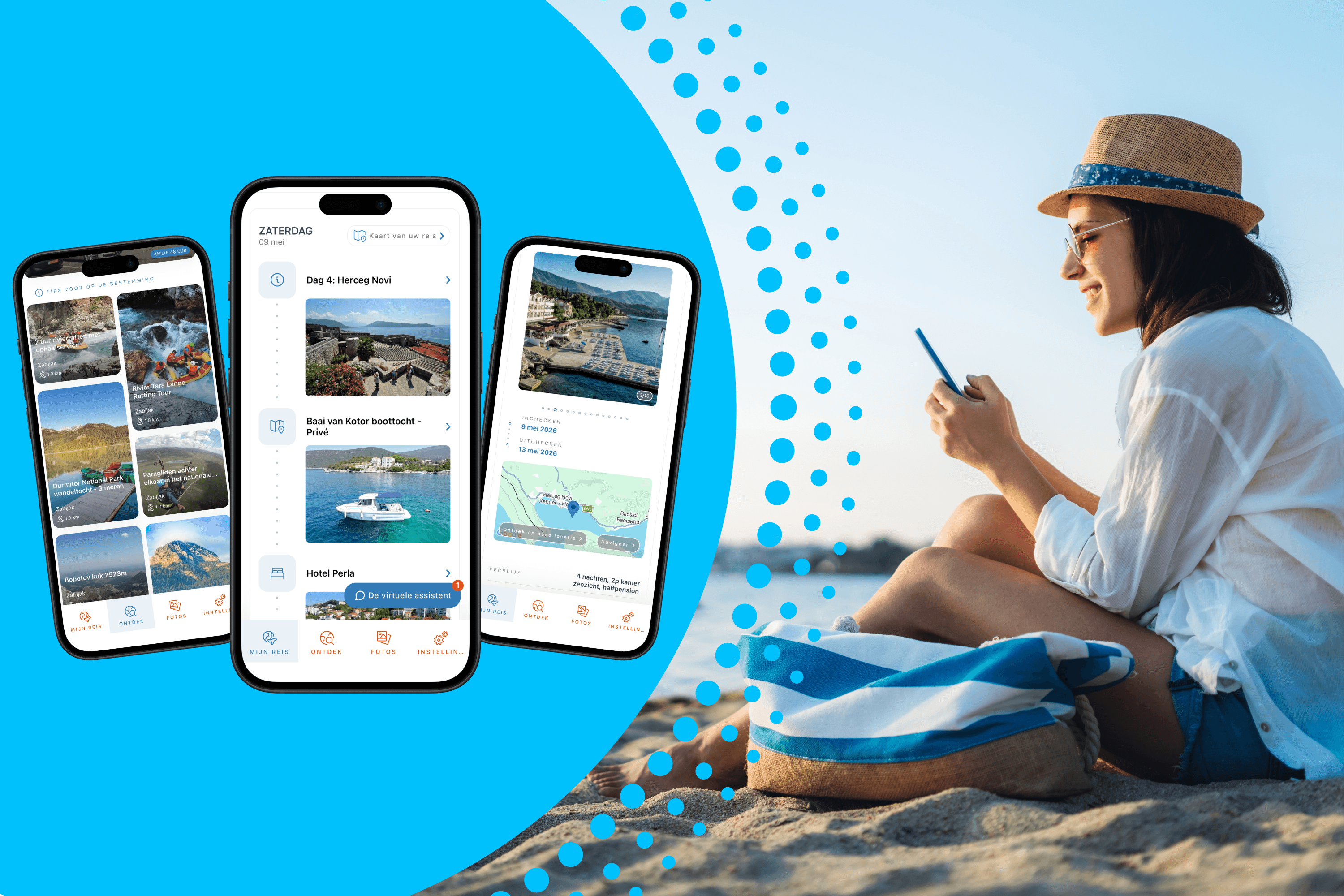
You do not have to reinvent the wheel. The app has already been developed for the travel world and includes features specifically suited to travel organizations. Think of a clear timeline with travel components, travel documents, vouchers, destination tips, contact details, push notifications, and opportunities to offer extra services.
Integrations with booking systems are also important. Because an app is only truly valuable when the correct travel information automatically ends up in the right place. When employees have to enter everything manually, extra work is created. And extra work is usually exactly what you don't want.
A good travel app should make things easier. For the traveler and for the organization.
Additionally, with a SaaS solution, you benefit from continuous improvement. New features, technical updates, and maintenance are managed centrally. As a result, the app remains current without you having to constantly think about the technical back-end yourself.
Your own brand remains visible
A common concern with SaaS solutions is that the app may not feel personal enough. With a good white-label travel app, this is not the case at all.
The app is configured in the corporate identity of your organization. Your brand is visible in the app, in the communication, and potentially even as your own app in the app stores (White-label). This keeps your organization recognizable to the traveler.
That is valuable. Because during the trip, your customer looks at their phone multiple times. Before departure to view travel details, on the way for documents or route information, and at the destination for tips and practical information.
Every time the traveler opens the app, your brand is present. Not intrusive, but exactly at the moment the customer is engaged in their trip.
More than just digital travel documents
A modern travel app is no longer just a digital folder with documents. Of course, vouchers, tickets, and practical data are important. But the real added value arises when the app actively supports the traveler.
Think of inspiring local tips, timely notifications, destination information, contact options with the travel organization, and extra services available directly from the app.
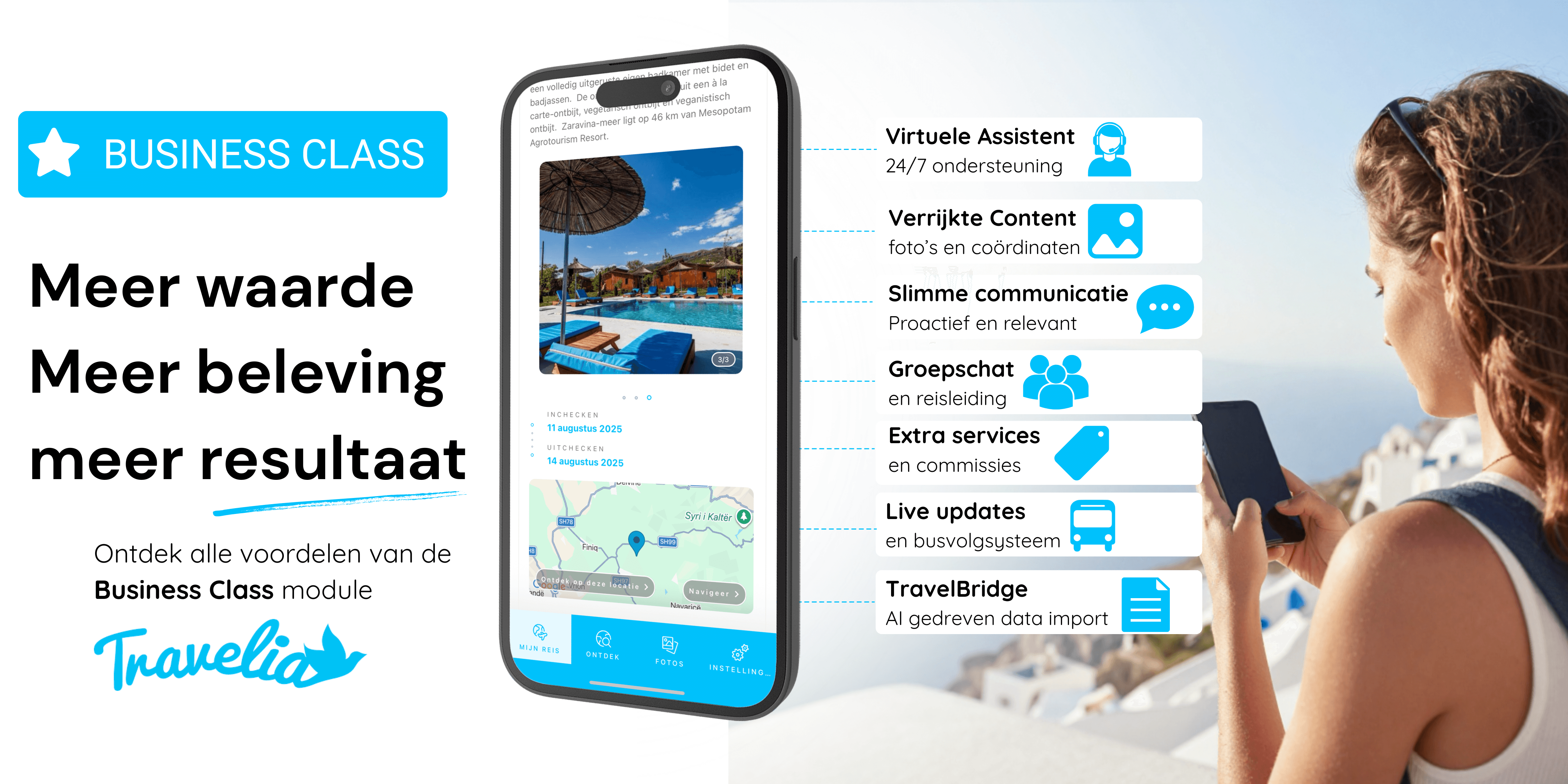
The Virtual Assistant plays an important role in this. During their journey, travelers can easily ask questions about their itinerary, destination, activities, restaurants, transfers, or practical matters. This gives them fast answers at any time of day, without creating direct extra work for the travel agency.
Additionally, employees' own knowledge can be added. For example, favorite restaurants, special viewpoints, useful travel tips, or frequently asked questions. This way, knowledge that is normally in minds, loose documents, or emails becomes digitally available to all travelers.
That makes the app more personal. And smarter.
When do you choose customized development?
Building your own travel app can be a good choice when your organization has a lot of internal technical capacity. For example, if you have your own development team, a large budget is available, and app development is a strategic part of your business operations.
Also, when your processes are so specific that no existing solution fits well, custom development can be interesting.
However, it is important to look beyond just the development phase beforehand. Who manages the app after launch? Who fixes bugs? Who keeps the app technically up to date? Who monitors security? And who ensures that the app still aligns with travelers' wishes two years from now?
If there are clear answers to these questions, custom-built could be appropriate.
When do you choose a specialized SaaS solution?
For many travel organizations, a specialized SaaS travel app is the most practical path.
Especially when you want to go live professionally quickly, without a major IT project. You benefit from existing technology, but you keep your own branding. You can guide customers better, strengthen your brand, and offer extra service, without your organization being burdened with technical maintenance.
A SaaS solution fits well with travel organizations that want to grow in service, but want to spend their time mainly on what they are good at: selling trips, advising customers, and creating extraordinary travel experiences.
Because ultimately, it is not about the app itself. It is about the traveler.
They want overview, convenience, and confidence. Before departure. During the trip. And sometimes even after, when the most beautiful memories are relived.
Travelia: your own travel app without a complicated IT project
With Travelia, you offer travelers a professional travel app in your own corporate identity, without having to build an app from scratch yourself.
The app is set up based on your brand and preferences. Travelers find their itinerary, documents, vouchers, tips, and practical information clearly in one place. They can also be supported during the trip with smart messages, destination tips, and a Virtual Assistant.
On the back-end, Travelia takes care of as much work as possible. Travel information can be loaded automatically via integrations with reservation systems or other smart solutions. Through the CMS, you can easily manage your own content, tips, and messages.
This way, you combine the look of your own app with the security of a specialized platform.
Conclusion: choose the path that fits your organization
Your own travel app can add a lot of value to the customer journey. It strengthens your brand, increases convenience for the traveler, and offers new opportunities to personally support clients.
The most important question is not whether an app is interesting, but which approach fits best.
Building it yourself gives maximum freedom, but also requires time, budget, and technical responsibility. A specialized SaaS solution offers speed, security, and convenience, while you still remain visible with your own brand.
For many travel organizations, that is the smartest route: a professional travel app for the customer, but no major IT project behind the scenes.
Curious to see what your own travel app could look like for your travel organization? We are happy to show you in a personal demo.